

When people ask about the new Florida HOA law, they usually mean House Bill 1203 from the 2024 session, which took effect on July 1, 2024. It rewrote parts of Chapter 720 of the Florida Statutes, the chapter that governs homeowners’ associations, and added rules for the managers who run them. Two other laws, one on hurricane protection in 2024 and one on building permits in 2026, cover related ground. This guide explains what changed for owners in gated communities across Southwest Florida and where to read the official text.
The New Florida HOA Law at a Glance
The official title is CS/CS/HB 1203, “Homeowners’ Associations,” and it became Chapter 2024-221, Laws of Florida. The House passed it 115 to 2 and the Senate passed it 40 to 0, according to the Florida Senate’s bill page. It took effect July 1, 2024.
The law touches six areas that matter to owners:
- Training and conduct rules for board directors.
- Online posting of association documents.
- Access to records, with criminal penalties for certain misconduct.
- Fine and hearing procedures.
- Limits on what an association can restrict or fine.
- Requirements for community association managers.

Managers who serve a homeowners’ association must now attend at least one member or board meeting in person each year, share their contact details and hours with members, and provide the management contract to any member who asks (section 468.4334). They also need continuing education on homeowners’ associations (section 468.4337).
Director Education and Conduct Rules
Under section 720.3033, every new director must submit a certificate showing they completed a state-approved education course within 90 days of being elected or appointed. Before 2024, a director could file a written statement saying they had read the governing documents instead. The current statute requires the course.
- The certificate is valid for up to four years, and directors repeat the course at least every four years.
- The curriculum covers financial literacy and transparency, recordkeeping, levying of fines, and notice and meeting requirements.
- Directors of associations with fewer than 2,500 parcels must complete at least four hours of continuing education each year, and directors of larger associations at least eight.
- A director who does not file the certificate on time is suspended from the board until they comply.
The same section bars officers, directors and managers from taking kickbacks. Knowingly soliciting or accepting one is a third-degree felony. A director or officer charged with certain crimes, such as theft of association funds or forging a ballot, must be removed from office. Associations also cannot use a debit card for association expenses, and misusing one counts as theft.
Records, Websites and Penalties
Section 720.303 now requires an association with 100 or more parcels to post key documents on a website, or make them available through a mobile app, by January 1, 2025. The list includes:
- The articles of incorporation, recorded bylaws and declaration of covenants, with amendments.
- The current rules, the annual budget and the financial report.
- The association’s insurance policies and its list of current contracts.
- Each director’s education certificate.
- Notices of member and board meetings and agendas.
Meeting notices must go up at least 14 days before a member meeting, and documents to be voted on at least 7 days ahead. The site must also include a protected area open only to owners and staff. On written request, the association must give an owner a username and password for it. Records such as Social Security numbers must be kept off the public site.
Owners can still request records directly. The association must make them available within 10 business days of a written request, and an owner denied access can recover minimum damages of $50 per day for up to 10 days. The 2024 law added criminal penalties. A director, board member or manager who knowingly, willfully and repeatedly violates the access rule with intent to harm the association or its members commits a second-degree misdemeanor. Knowingly destroying or defacing accounting records with intent to cause harm is a first-degree misdemeanor.
An owner can also ask in writing for a detailed accounting of what they owe. The board has 15 business days to respond.
Fines, Hearings and Late Interest
Section 720.305 sets the process an association must follow before it fines you or suspends use rights. A fine may not exceed $100 per violation unless the governing documents say otherwise, and continuing violations are capped at $1,000 in total, again unless the documents provide otherwise. The procedure includes:
- At least 14 days’ written notice of your right to a hearing.
- A hearing within 90 days of the notice, before a committee of at least three members who are not officers, directors or employees, or their close relatives.
- The option to attend the hearing by telephone or other electronic means.
- Written findings within 7 days after the hearing.
- No fine or suspension if you cured the violation before the hearing or in the way the notice specifies.
- A payment date at least 30 days after the written findings are delivered.
Attorney fees cannot be awarded against the owner based on the board’s actions before that payment date. Under section 720.305(7), an association also may not fine or suspend for leaving garbage cans at the curb within 24 hours before or after collection day. Nor may it do so for holiday lights or decorations unless they stay up more than a week after the owner receives written notice. Under section 720.3085, unpaid assessments can accrue simple interest only, not compound interest.
What Associations Can No Longer Restrict
Several 2024 provisions limit what covenants and rules can do, whatever the documents say:
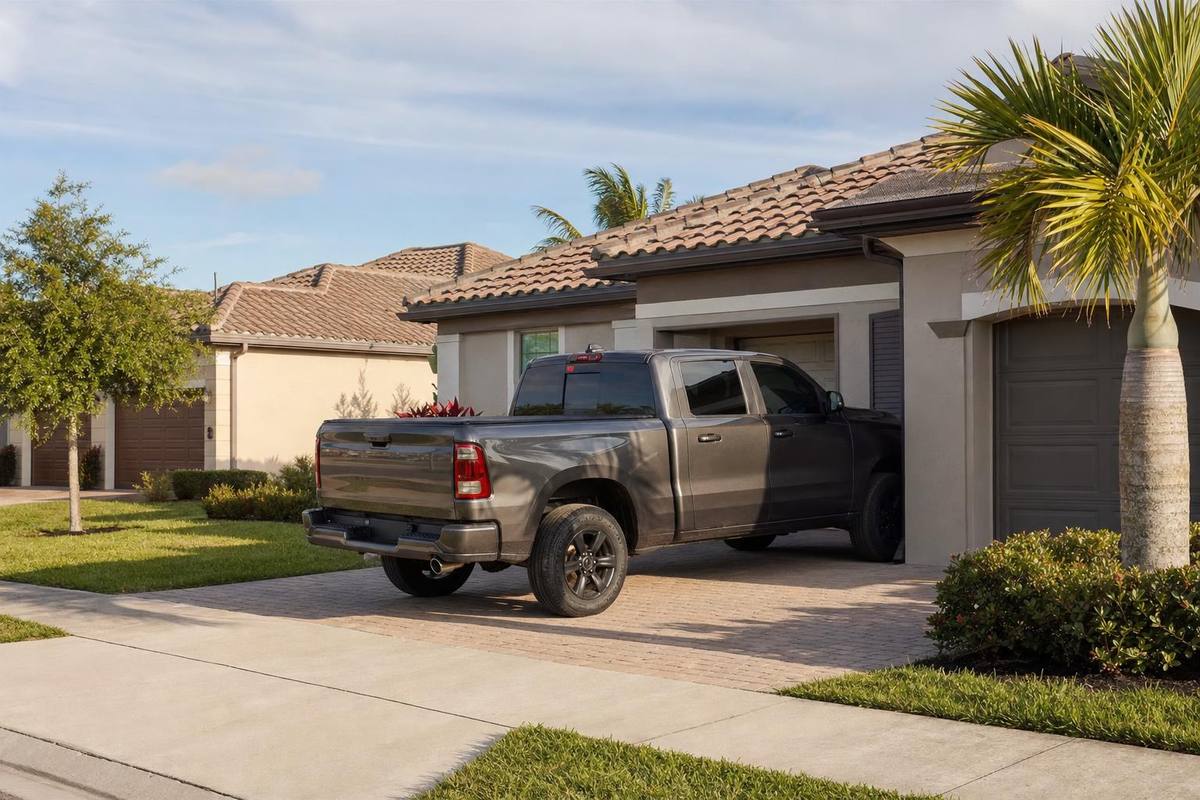
- Items not visible from the street: section 720.3045 bars an association from restricting items not visible from the parcel’s frontage, an adjacent parcel, a common area or a golf course. It lists artificial turf, boats, flags, vegetable gardens, clotheslines and recreational vehicles.
- Interior and equipment: under section 720.3035, an association cannot regulate the interior of a structure that is not visible from those same vantage points. It also cannot require review of an air-conditioning or heating system that is not visible and is substantially similar to an approved one.
- Written denials: if an architectural committee denies a request, it must cite the specific rule and the part of the proposal that conflicts.
- Hurricane protection: a separate 2024 law, CS/HB 293 (Chapter 2024-205), requires boards to adopt hurricane protection specifications. A board cannot deny an application for protection that meets them.
- First responder vehicles: section 720.318 bars an association from stopping a first responder who is an owner, or an owner’s tenant or guest, from parking an assigned first responder vehicle where they may otherwise park.
Updates Since 2024
We checked the current text of the sections described above on the Florida Senate site on October 7, 2026, and they still contain these rules. Later acts have made other edits to Chapter 720, so read the current statute for the exact wording.
One 2026 law does matter. CS/CS/HB 803, Chapter 2026-63, took effect July 1, 2026. It added a rule to section 720.3035: an association or architectural committee cannot require a government building permit as a prerequisite for its own review of an owner’s proposed improvement. Owners still need any permit the law requires before they build.
You can read the full text of the 2024 HB 1203 bill page and the current Chapter 720 text on the Florida Senate website. The HB 803 bill page covers the 2026 permit change. Our how it works page explains where the information in our guides comes from.
Frequently Asked Questions
Does the law apply to condominiums?+
This law amends Chapter 720, which governs homeowners’ associations. Condominiums are governed by a different chapter, so check which statute your association falls under.
My association has fewer than 100 parcels. Do I still have access to records?+
The website requirement applies at 100 or more parcels. Owners of every association covered by Chapter 720 can still request official records in writing and expect access within 10 business days.
Can my association still fine me?+
Yes, but only after following the notice and hearing steps in section 720.305, and subject to the limits above. Your declaration and rules still set what counts as a violation.
Where can I read my own community’s rules?+
Start with the declaration, bylaws and rules, which the association must keep as official records. Many are on the association’s website or app. Our resources page has basic explainers on HOAs and CDDs.
This is general information, not legal advice, so check your association’s recorded documents or ask a Florida-licensed attorney about your situation. To see how individual neighborhoods are governed, visit our community guides.
Contractor directory
Find pros who already work behind your gate.
Browse contractors by trade and community, with license checks noted on each listing.
Rules and fees vary by community. Check your own governing documents and county sources before you rely on any article. Spot something out of date? Report a correction.