
Charlotte County evacuation zones are storm-surge planning areas used when local officials decide who should leave before a hurricane or tropical storm. They are not the same as FEMA flood zones, and they are not a year-round rating of a property. If you live, own, rent, or plan to buy in Charlotte County, knowing your zone and your exit plan can save time when a storm watch becomes more serious.
Charlotte County evacuation zones: what they mean
Charlotte County uses evacuation zones to help emergency managers issue staged evacuation instructions. The zones are based on the chance that storm surge could affect an area during a tropical system. Lower-lying coastal areas and places near tidal water are generally more likely to be called first, but every storm is different.
An evacuation zone tells you whether your address may be included in an evacuation order. It does not tell you whether your home will flood, how much damage a storm may cause, or whether a road will remain open. Wind, rain, inland flooding, power outages, and blocked roads can affect addresses outside a called evacuation zone.
The best starting point is the official Charlotte County Know Your Zone page. Use that page before hurricane season and again when a storm is approaching, because public instructions are tied to the facts of each event.
How to find your zone by address
Look up the address where you will actually be during the storm, not only the mailing address or the clubhouse address. For many residents, that means checking the exact home, condo building, rental unit, or seasonal property. If you are helping a neighbor or an out-of-town owner, confirm the street number, unit number, and ZIP code before searching.
Use Charlotte County’s official evacuation zone tool or map, then write the result in a place you can find without internet service. A simple note in your phone, a printed hurricane checklist, and a label on a refrigerator calendar can all work. If a storm is close, do not rely on memory from a past season.
After you find the zone, compare it with the wording of any county evacuation order. Officials may call one zone, several zones, mobile or manufactured homes, barrier areas, or other housing types depending on the storm. Confirm current instructions with Charlotte County Emergency Management or other official county alerts before deciding whether to stay or leave.
Owners in and near Punta Gorda may also want to review our Punta Gorda community guide for local orientation, especially if they are new to the area. The guide is not a substitute for county emergency instructions, but it can help residents understand nearby roads and general location terms used in everyday local planning.
Do not confuse evacuation zones with flood zones
Evacuation zones and flood zones are often mixed up because both involve water risk. They serve different purposes. Evacuation zones are used for emergency movement before a storm, while flood zones are commonly tied to flood mapping, lending, insurance, and building rules.
A home may be in a FEMA flood zone but not in the first evacuation area called for a specific storm. Another home may be outside a high-risk flood zone but still receive an evacuation instruction because of storm surge, access limits, or nearby water. The two maps answer different questions.
When reviewing a property, keep both items on your checklist. Ask, “What is the evacuation zone?” and also ask, “What flood zone applies to the parcel?” For flood insurance, elevation certificates, premiums, or building requirements, confirm your situation with the county, your insurer, lender, surveyor, or another licensed professional as appropriate.
For a broader storm checklist, see our Southwest Florida hurricane planning guide. It covers preparation topics that apply across Lee, Collier, and Charlotte counties, while county evacuation orders still control the official local guidance for a specific storm.
Plan more than one route before a storm is close
Your evacuation route should start with a destination. Decide whether you will go to a friend’s home, a hotel, a public shelter if one is opened, or another location outside the evacuation area. A route without a destination can create last-minute confusion and may send you toward crowded roads.
Use the county’s instructions first, then choose primary and backup routes. A route that looks shortest on a normal afternoon may not be the best option during a storm evacuation. Traffic control, bridge conditions, flooding, crashes, fuel availability, and emergency work can change how people are directed to move.
The federal Ready.gov evacuation guidance recommends planning where to go, how to get there, and what to take. It also advises people to follow recommended evacuation routes and stay alert to local directions. That advice is especially useful in a county with waterfront neighborhoods, canals, bridges, and seasonal population changes.
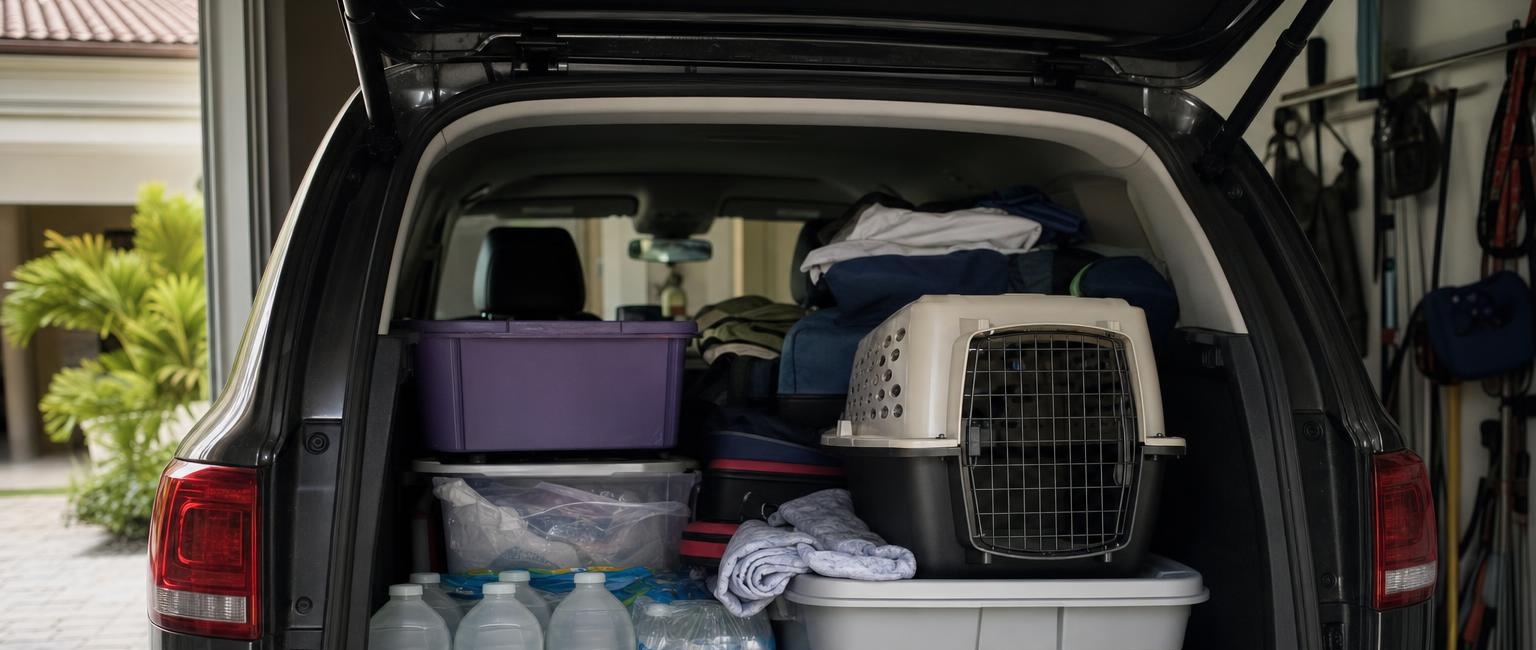
Plan for the practical steps that slow people down. Keep fuel or charging needs in mind, know how you will transport pets, gather medications, and keep key papers in a waterproof container or digital backup. If you use medical equipment, mobility devices, or refrigerated medication, make a separate power and transport plan well before peak hurricane season.
What gated community residents should check
Gated community residents should know how access works when power, internet, or staffing is disrupted. Ask the association or property manager how residents exit if a gate fails, whether there is a manual release process, and how emergency vehicles are handled. Do this during a calm week, not when watches and warnings are already in effect.
Confirm whether the association sends alerts by email, text, website, phone tree, or posted notice. Association messages can be useful for gate operations, amenity closures, debris rules, and post-storm access, but they do not replace county evacuation orders. County emergency instructions should remain the controlling source for whether to leave.
If you live in a multi-building property, verify whether your building has a separate street address or unit numbering format that affects map searches. Some online tools are sensitive to spelling, directional words, and abbreviations. If the result seems wrong, try the county property address format or contact the county source listed with the tool.
Residents comparing neighborhoods can use our Southwest Florida gated community directory as a starting point for location research. For evacuation planning, however, always check the exact address with Charlotte County’s official resources rather than relying on a general neighborhood description.
How to keep the plan current
Check your evacuation zone at least once before each hurricane season and again after a move, major road project, address change, or property purchase. Local maps and public tools can be updated. A printed note from several years ago may not reflect the latest county information.
Store the plan in more than one place. A useful plan includes the zone, destination, primary route, backup route, pet plan, medication list, insurance contact information, and a way to receive official alerts. Share the basics with anyone who may be staying in the home during storm season.
Do not wait for a named storm to decide where you will go. Hotel rooms, fuel, pet-friendly lodging, and transportation help can become harder to arrange as a storm approaches. If you may need public shelter information, transportation assistance, or special medical planning, contact the appropriate county program ahead of time and confirm eligibility directly with the public office.
After a storm, return only when local officials say it is allowed for your area. Road access, utilities, debris, standing water, and emergency operations can limit re-entry even after weather improves. Keep identification and proof of residence with you, especially if access control points are used after a major event.
Frequently Asked Questions
How do I know if my Charlotte County evacuation zone has been ordered to leave?+
Find your zone by address first, then compare it with current county evacuation instructions. Orders may name specific zones or other property types, so read the wording carefully. Confirm current orders through Charlotte County Emergency Management or other official county alert channels.
Is my evacuation zone the same as my flood zone?+
No. An evacuation zone is used for storm evacuation planning, while a flood zone is used for flood mapping and related property issues. Both are useful, but they answer different questions and should be checked separately.
Should I leave if my zone is not ordered to evacuate?+
Follow official instructions and consider your personal situation. Power needs, medical needs, building type, pets, transportation, and the condition of your route can affect your plan. If you are unsure about medical or transportation support, contact the proper county program or a qualified professional before a storm is close.
Where should I go if I evacuate from Charlotte County?+
Choose a destination outside the ordered evacuation area, such as a confirmed lodging reservation, a friend’s home, or a public shelter if one is opened and appropriate for your needs. Check pet rules, accessibility, medication storage, and travel time before leaving. Keep a backup destination in case conditions change.
For more local storm preparation context, visit our Southwest Florida hurricane planning guide and use it alongside official Charlotte County instructions.
Contractor directory
Find pros who already work behind your gate.
Browse contractors by trade and community, with license checks noted on each listing.
Rules and fees vary by community. Check your own governing documents and county sources before you rely on any article. Spot something out of date? Report a correction.