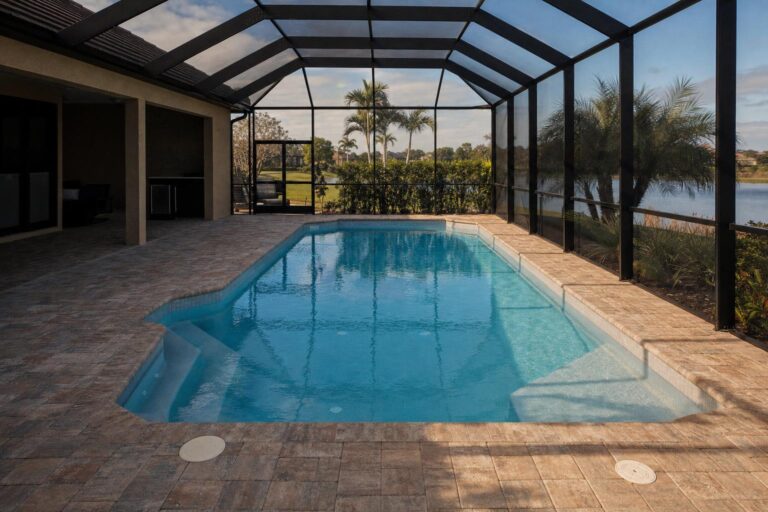
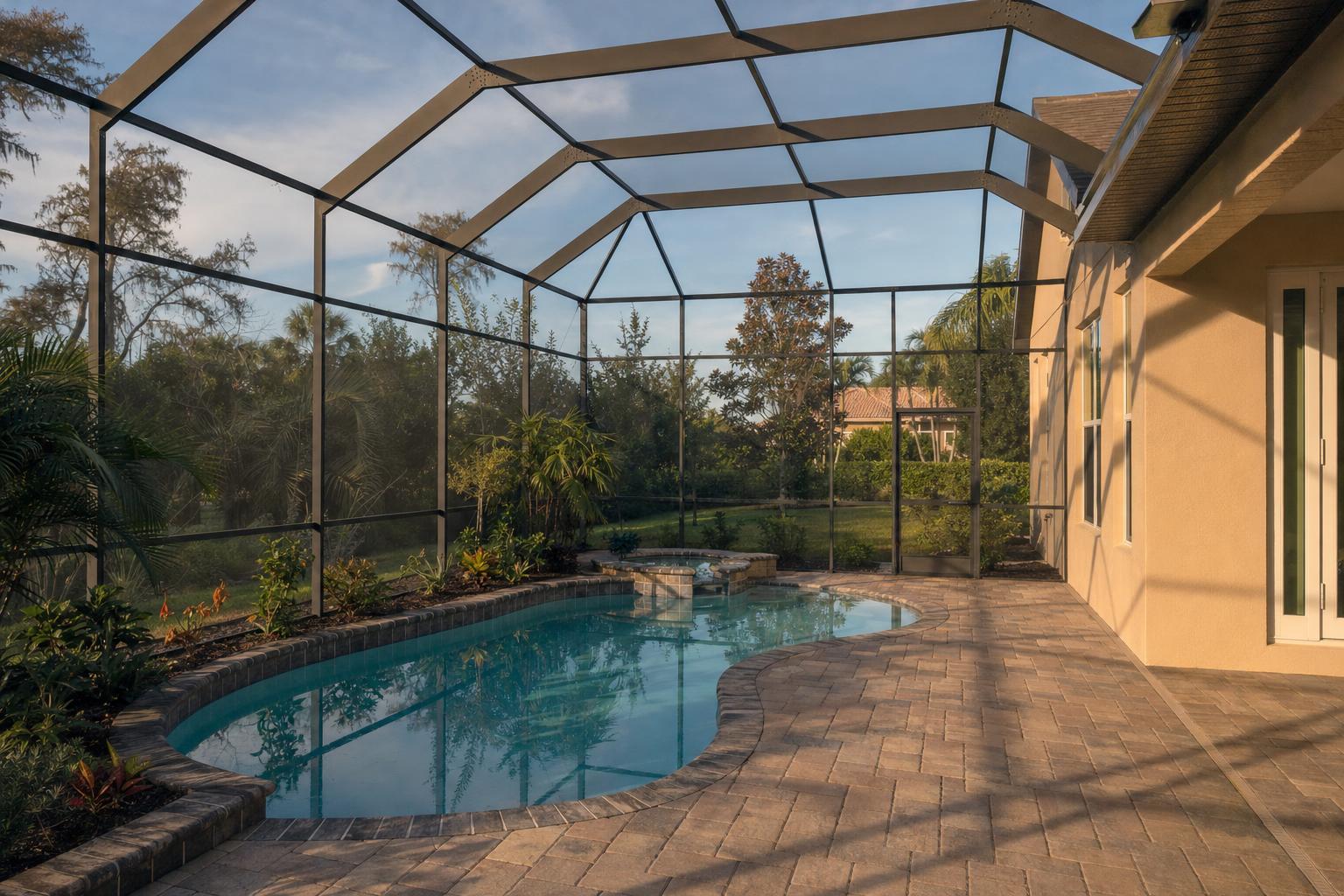
The screened lanai is one of the most used spaces in a Southwest Florida home. It keeps out insects and leaves, shades the pool and turns the backyard into an extra room for most of the year. It also takes a beating from sun, salt air, palm fronds and storms. When panels tear or the whole cage looks tired, the first question is usually lanai screen repair cost. This guide explains what drives that cost, the difference between patching panels and full rescreening, how storm damage fits in and the association rules to check in a gated community.
What Drives Lanai Screen Repair Cost
Bids vary with the size and condition of the enclosure, so compare quotes on the factors that actually move the total:
- Number and size of panels. A few small torn panels cost far less than rescreening an entire two-story pool cage.
- Screen type. Standard insect screen usually costs least, while heavier, pet-resistant, privacy or “no-see-um” screens cost more.
- Height and access. Roof panels and tall walls need ladders or lifts, and tight side yards slow the work.
- Frame condition. Corroded screws, loose splines, bent members or damaged gutters add repairs beyond the screen itself.
- Doors and kick plates. Replacing a screen door, closer or lower kick panels adds parts and labor.
- Color matching. Matching an existing bronze or white frame and approved screen color can limit material choices.
Ask each company to price panels, screen type, spline, any frame or screw replacement and doors separately. That makes bids comparable and shows you whether a full rescreen is worth it compared with a handful of repairs this year.
Patching Panels vs Full Rescreening
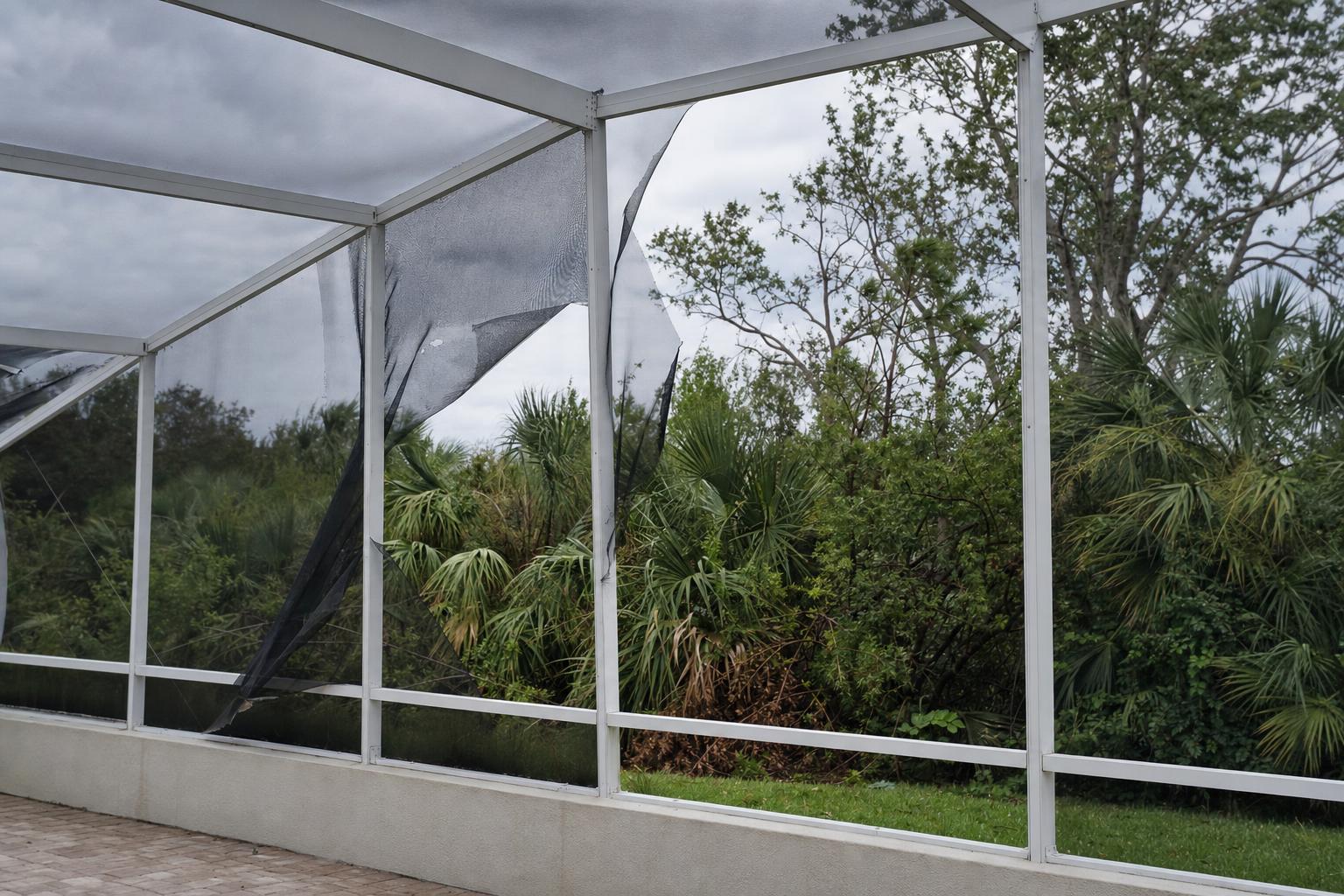
Repairing a few panels makes sense when the damage is limited and the rest of the screen is in good shape. New panels may look brighter than the weathered screen around them, which some owners accept and others do not.
Full rescreening makes sense when many panels are brittle, sagging or faded, when the screen tears with little pressure, or when you want a different screen type throughout. Most companies remove all old screen and spline, inspect the frame and install new screen panel by panel. Ask whether the price includes replacing corroded screws, which often fail at the same time as old screen.
Some owners split the difference, which can spread the cost across two budget years: rescreen the walls and the most exposed roof panels now, and the rest later. If you go that route, ask the contractor to note which panels were replaced and when, so future repairs match.
Choosing a Screen Type
Screen products differ in weave, strength and visibility. Common choices include:
Scroll table to compare columns
| Screen type | Typical use | Trade-offs |
|---|---|---|
| Standard insect screen | Most pool cages and porches | Lowest cost; good visibility; tears more easily |
| Fine-mesh “no-see-um” screen | Areas with tiny biting insects | Blocks smaller insects; slightly reduced airflow and visibility |
| Pet-resistant screen | Lower panels where pets push or scratch | Much tougher; heavier look; costs more |
| Privacy or solar screen | Sides facing neighbors or strong sun | Adds shade and privacy; darker view outward |
If you are not sure which screen to choose, ask the contractor to bring samples and look at them in place, in both morning and afternoon light. A screen that seems dark in the hand may look fine from inside the lanai, and the reverse is also true.
Many owners mix types, using pet-resistant screen on the lower panels and standard screen above. Check your association’s rules first, because some communities specify screen color or limit privacy screens on certain sides.
Simple Care That Extends Screen Life
A little routine attention can push back the day you need a full rescreen:
- Trim nearby trees and palms. Falling fronds and branches cause many tears, especially on roof panels.
- Clean gently. A soft brush and a low-pressure rinse remove dirt and pollen without stretching the screen. High-pressure spray can tear aging panels.
- Fix small tears early. A small hole spreads in wind and lets insects in, and patching one panel costs less than several.
- Check screws and splines. Loose spline lets panels sag, and corroded screws weaken the frame over time.
- Keep gutters clear. Many cages tie into roof gutters, and overflowing water can stain or damage the enclosure.
Doing a quick walk-around every few months, and after any strong storm, helps you catch problems while they are still small repairs.
Storm Damage and Your Lanai
Screen enclosures are vulnerable in high winds. Torn panels, bent members and, in severe storms, collapsed cages are common sights after a hurricane. A few steps help:
- Before a storm: bring in or secure patio furniture, plants and anything that could be thrown into the screen or the house.
- After a storm: stay clear of a damaged cage until you are sure it is stable, photograph everything before cleanup, and contact your insurer.
- Check your policy: coverage for screen enclosures varies, and some policies limit or exclude it, while hurricane deductibles may exceed the repair cost. Ask your agent how your policy treats screen enclosures before storm season.
Screen enclosures are not hurricane protection for the doors and windows behind them, so plan opening protection separately. Our hurricane preparedness hub covers the rest of your storm plan.
Who Can Do the Work
Screen enclosures are aluminum structures, and in Florida building or replacing them falls under contractor licensing. Florida’s rule on specialty structure contractors, Rule 61G4-15.015, lists screened porches, screened enclosures and pool enclosures within that license category. Simple rescreening may be handled differently from structural work, so ask any company what license it holds and whether your job needs a permit from the city or county.
For frame repairs, replacement cages or anything structural after a storm, choose a properly licensed contractor and confirm the license on the state’s DBPR license search. Ask for proof of liability insurance and workers’ compensation as well.
When you interview companies, ask how many panels they expect to replace, what screen brand and type they will use, whether screws and spline are included, how long the job will take and what warranty covers the work. A clear written scope protects both sides.
Our screen and lanai directory lists local companies, and our wider local pros directory covers pool, roofing and other trades you may need at the same time.
Association Rules in Gated Communities
In many gated communities, screen enclosures are an exterior feature that the association regulates. At Marina Bay in Fort Myers, for example, the declaration routes exterior changes, including screen enclosures, through the architectural control committee, which may charge a review fee and hold a deposit; its 2018 application form listed a $350 fee and the initial deposit was set at $5,000.
Before you order work, ask your association:
- Does like-for-like rescreening need approval, or only changes to color, screen type or the frame?
- What frame and screen colors are approved?
- Are privacy or solar screens allowed, and on which sides?
- What are the rules on contractor hours, gate access and debris removal?
- After a storm, are there faster approval steps for repairs?
Keep the approval and the contractor’s invoice with your home records. They help at resale and if questions come up later about who approved what.
This is general information. Confirm licensing, permits, insurance coverage and association rules before you sign a contract.
Frequently Asked Questions
How long does lanai screen last in Florida?+
It depends on the screen type, sun exposure, salt air and how much wear it gets. Ask a contractor to assess the screen’s condition rather than relying on a set number of years.
Can I replace a few panels myself?+
Some owners do simple ground-level panels, but roof panels and frame repairs are best left to professionals, and your association may have rules on who does the work.
Does homeowners insurance cover screen damage?+
Sometimes. Coverage and deductibles vary by policy, especially for hurricane damage. Read your policy and ask your agent before storm season.
When you are ready, request itemized quotes from two or three companies in our screen and lanai directory and compare them line by line.
Contractor directory
Find pros who already work behind your gate.
Browse contractors by trade and community, with license checks noted on each listing.
Rules and fees vary by community. Check your own governing documents and county sources before you rely on any article. Spot something out of date? Report a correction.