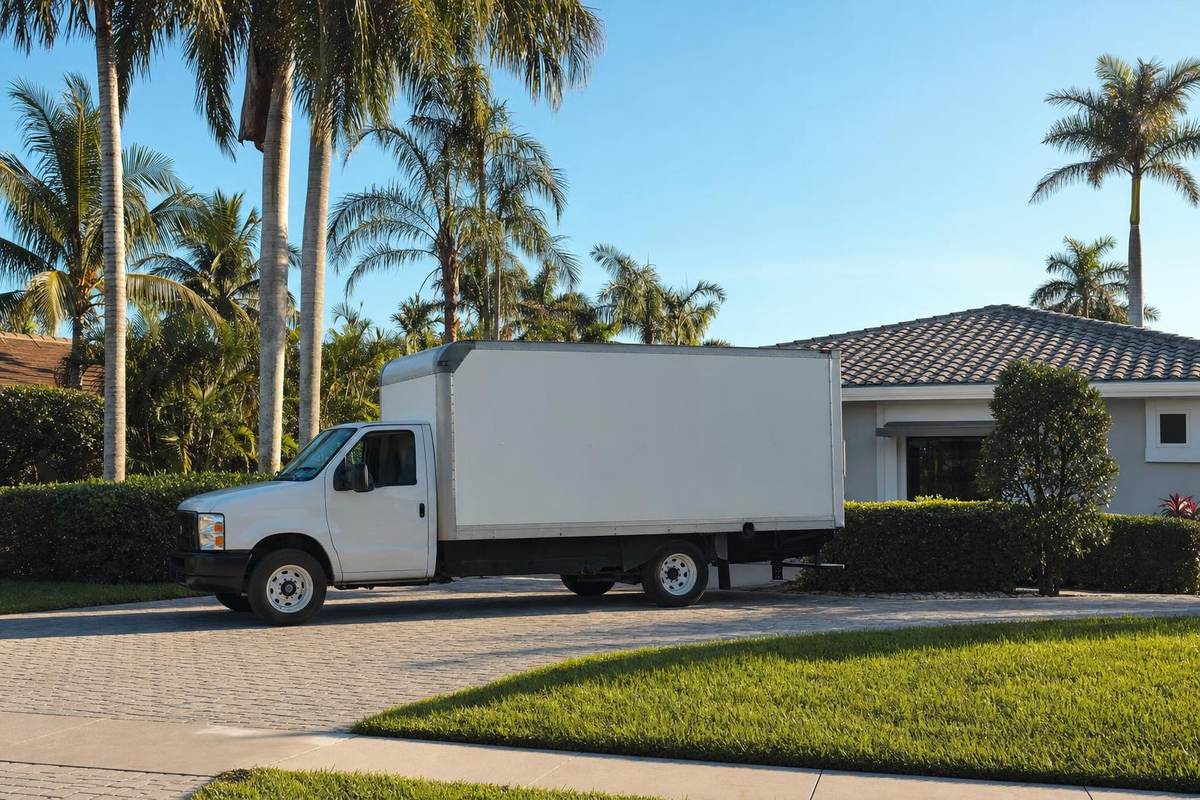
Boxes arrive on one day, but the paperwork behind moving to Naples, Florida stretches across several offices and a few hard deadlines. Some of those clocks start the moment you take a job, enroll a child in school or sign a deed. Others run to a single date each year, March 1. This guide puts the tasks in the order most new Collier County residents meet them, so nothing slips while you are still unpacking.
We are the editors of a gated-community guide, not a government office. Treat the steps below as a map and confirm each rule with the agency we name.
Know Where You Are Moving: Naples City, Collier County and the “Naples” Address
A Naples mailing address does not always mean a Naples city address. The City of Naples is a small incorporated area along the Gulf and Naples Bay. A much larger stretch of the surrounding area, including many gated neighborhoods east of US-41 and along Collier Boulevard, sits in unincorporated Collier County yet still receives a Naples mailing address and ZIP code.
That difference decides who handles your permits, code questions, trash service and sometimes your water bill. It also changes how you look up your property record. Before you sign, check the parcel on the Collier County Property Appraiser’s website, which lists the taxing authorities that apply to the address.
Our Naples hub lists the gated communities we cover in the area, and each guide states its jurisdiction so you can see which side of the line a neighborhood falls on.
Driver License and Vehicle Registration After Moving to Naples
Florida sets short clocks for both. Under Florida Statutes section 322.031, a nonresident who accepts employment or enrolls children in Florida public schools must get a Florida driver license within 30 days of starting that work or school if they drive here.
Section 320.38 sets 10 days to register your vehicles in Florida once work or school begins. The Florida Highway Safety and Motor Vehicles department (FLHSMV) applies the same 30-day and 10-day guidance to new residents. We checked the statutes in October 2026, so confirm the current rule on FLHSMV’s new-resident page before you set a date.
To keep the sequence simple:
- Buy Florida auto insurance from an insurer licensed here. Registration requires it.
- Visit a driver license office or tax collector office that offers license services, in person, with your identity, Social Security and residency documents.
- Title and register each vehicle through the Collier County Tax Collector.
- Update the address on your insurance, bank and voter records.
Bring originals, not photocopies. Appointment availability varies, so book early. Do the license and registration steps early for another reason: the homestead office asks for proof of Florida residency.
Register to Vote and Establish Florida Residency
Florida requires voters to be legal residents of both the state and the county where they register. Under section 97.055, the registration books close on the 29th day before each election, so register well ahead of any ballot you want to vote on. You can register through the Collier County Supervisor of Elections or the state’s online voter registration system.
Voter registration also matters beyond elections. The Collier County Property Appraiser’s homestead checklist lists a Collier voter registration, a Florida driver license and a Florida vehicle registration, each dated before January 1, as evidence of residency.
Homestead Exemption: The January 1 and March 1 Dates
The homestead exemption lowers the assessed value used to calculate your property tax bill on your permanent residence. The Collier County Property Appraiser’s homestead page says a person who holds legal or equitable title on January 1 and makes the property their permanent residence is eligible. As posted in October 2026, the exemption includes a reduction of up to $25,000 from assessed value for all taxing authorities, plus an additional exemption on assessed value above $50,000 that does not apply to school district levies. The additional amount is adjusted for inflation under section 196.031.
The timeline works like this:
- January 1: you must own and live in the home as your permanent residence by this date to qualify for that tax year. If you close in February, your first exemption year is the following year.
- March 1: the statutory deadline to file with the county property appraiser (section 196.011). The appraiser’s page also says you can pre-file for the following year, but pre-filing opens only after March 1.
- In person: the Collier office states that new homestead applications must be made in person at one of its locations.
Bring the deed, Social Security numbers for all applicants and spouses, and the dated voter, license and vehicle records noted above. The exemption is not automatic, and Florida allows one per family unit. This is general information, so confirm your eligibility with the Collier County Property Appraiser or a licensed tax professional.
Set Up Utilities: Electric, Water, Sewer and Trash
Start the electric account before your closing date so the lights are on at the walk-through. Florida Power & Light serves a large part of Collier County, but not every address, so confirm your provider using the account number on a prior bill or your closing paperwork.
Water and sewer depend on location. The City of Naples operates a water and sewer system, and city and county documents indicate a joint service area between the city and Collier County Utilities that reaches into unincorporated Collier; confirm with the utility. In that area, new accounts require a deposit placed with Collier County Utilities by the property owner. Outside the joint area, unincorporated addresses are generally served by the county water-sewer district, and a few properties use wells or septic. Ask the seller or your closing agent which utility serves the address, then contact that utility to open the account. Gated communities often handle trash collection, lawn care or cable through the association, so ask the manager what is bundled.
Our resident resources page collects the agency links we use for these setup tasks.

Hurricane Season and Your Evacuation Zone
The Atlantic hurricane season runs from June 1 to November 30, according to the National Hurricane Center. A move in late summer or fall puts you in the middle of it, so settle the basics in your first week.
- Find your evacuation zone. Florida’s Know Your Zone tool lets you enter a street address. Zones are lettered, with Zone A the most vulnerable and the first to be told to leave.
- Separate the zone from the flood zone. An evacuation zone reflects storm surge risk, while a FEMA flood zone drives flood insurance. A home can be outside one and inside the other.
- Review insurance. Homeowners policies generally exclude flood, and flood coverage often carries a waiting period. Ask an independent agent how both apply to your address.
- Make a plan. Decide where you would go, which documents you would take and how you would reach your association.
We keep a dedicated hurricane preparedness guide for Southwest Florida, and each community guide lists its mapped zones where county data is available.
Choosing a Community in Naples
Once the setup tasks are clear, the larger decision is where to live. Naples communities differ in governance, fees, amenities and flood exposure, and no single list fits everyone. Compare these points for every neighborhood you tour:
- Whether the community has a master association, sub-associations or both
- What the dues cover (gate, lawn care, cable, reserves) and what is billed separately
- Whether golf, tennis or a club requires a separate membership; if the guide does not state it, ask the club
- Flood and evacuation zone for the specific lot
- Whether the neighborhood sits inside the city or in unincorporated Collier County
Our community directory puts those facts side by side. Guides such as Grey Oaks show how governance and amenities are documented.
Frequently Asked Questions
Can I keep my out-of-state license if I only spend winters in Naples?+
It depends on whether you establish residency. The 30-day rule in section 322.031 applies when a nonresident takes a job or enrolls children in a Florida public school. Part-year visitors should ask FLHSMV how their situation is treated before relying on an out-of-state license.
If I close in February, can I still claim homestead this year?+
The Collier appraiser’s page says you must hold title and make the home your permanent residence on January 1. A February closing misses that date for the current year, so plan to file for the next year after March 1 passes.
How do I find out which utility serves a Naples address?+
Ask the seller, the title company or the community manager, then confirm with the City of Naples or Collier County Utilities. The two systems overlap in a joint service area, so the mailing address alone does not settle it.
Do I need to leave if a storm is approaching?+
Only when officials order your zone to evacuate, though you should never wait for an order to prepare. Look up your zone with Know Your Zone before a storm forms and follow Collier County Emergency Management announcements.
Visit our Naples community guides to see which jurisdiction, fees and flood zones apply to each neighborhood, and check each office named above before you act on a deadline.
Contractor directory
Find pros who already work behind your gate.
Browse contractors by trade and community, with license checks noted on each listing.
Rules and fees vary by community. Check your own governing documents and county sources before you rely on any article. Spot something out of date? Report a correction.