
You find a newer neighborhood you like, then notice a line on the listing or the tax bill that does not match your usual math. What is a CDD fee? It is the annual charge a community development district levies on the homes inside it to pay for roads, drainage, utilities and similar infrastructure. It is separate from your county property taxes and from any HOA dues, and buyers in many Southwest Florida neighborhoods meet it for the first time at the contract stage.
What a Community Development District Is
A community development district, or CDD, is a special-purpose local government. Florida created the model through Chapter 190 of the Florida Statutes, known as the Uniform Community Development District Act of 1980. The statute’s logic is that the land that benefits from the infrastructure pays for it: assessments are apportioned among benefited lands in proportion to the benefits each tract receives.
Florida law lists what a district can build, own and maintain (section 190.012). The list includes:
- Water management and stormwater control.
- Water supply, sewer and wastewater systems.
- District roads, street lights, landscaping and hardscaping.
- Parks and recreation facilities, with local government consent.
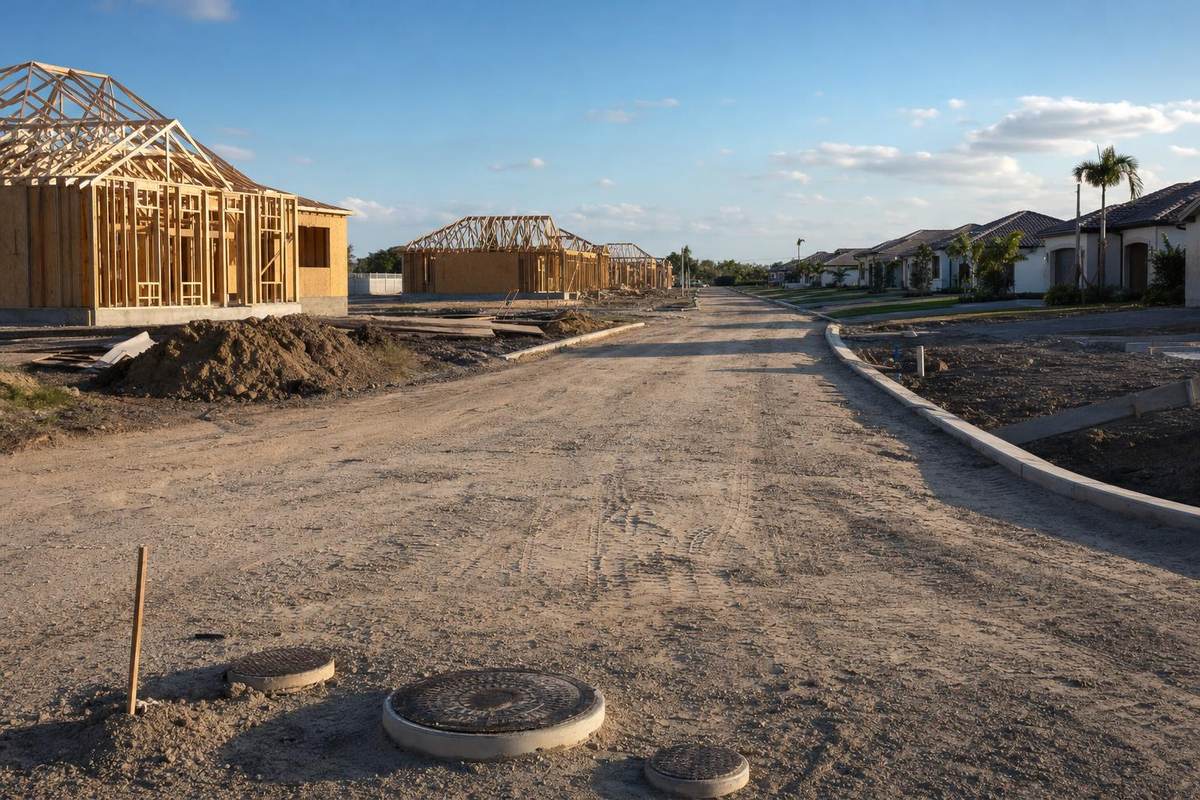
A district is governed by a board of supervisors, and the board sets its budget and assessments each year. It is separate from the homeowners’ association, which enforces the community’s covenants.
What Is a CDD Fee, and What Does It Pay For?
People use “CDD fee” for the assessments a district places on each property. Chapter 190 describes two main kinds, and most bills combine them.
Debt service assessments
The board can levy benefit special assessments to finance district facilities (section 190.021). In practice, the district sells bonds to pay for construction, and the assessments repay those bonds. The board determines the annual installment each year. State law limits district bonds to a maturity of 40 years from issuance (section 190.016), but each district’s own bond documents set the real schedule.
Operations and maintenance assessments
The same section lets the board levy a maintenance special assessment to maintain and preserve district facilities. This covers recurring costs such as upkeep of the roads, drainage, landscaping or amenities the district owns. Because the board sets its budget each year, this part can change. The board can levy it each year for as long as the district maintains facilities.
The statute also gives some districts the power to levy ad valorem taxes, subject to a referendum when the state constitution requires one. Most buyers will deal with the non-ad valorem assessments described here.
How a CDD Appears on Your Property Tax Bill
The board certifies its assessments to the property appraiser by August 31 each year (section 190.021). The assessments go onto the county tax roll. The tax collector then collects them in the same manner and at the same time as county taxes. They appear in the non-ad valorem section of the bill, not in the line items based on millage.
Three practical points follow:
- They are liens. The statute says these assessments are a lien on the property until paid, enforceable like county taxes. Unpaid amounts can be delinquent and carry penalties the same way county taxes do.
- Homestead exemption does not reduce them. The Lee County Property Appraiser describes the first $25,000 homestead exemption as applying to property taxes except for special assessments.
- They are not in millage estimates. Our own community guides use the Lee County Property Appraiser’s 2025 millage book, which excludes non-ad valorem special assessments such as CDD charges. A guide’s millage figure is therefore not your whole bill.
If you finance the purchase, ask your lender whether the CDD assessment is included in your escrow payment or billed to you separately.
What the Law Requires at Sale
Florida sets a disclosure rule for districts in section 190.048. After a district is established, each contract for the initial sale of a parcel or a residential unit within it must carry a specific statement. It sits immediately before the purchaser’s signature line, in bold type larger than the rest of the contract. In summary, the statement says:
- The named district may impose and levy taxes or assessments, or both, on the property.
- Those charges pay the construction, operation and maintenance costs of certain public facilities and services.
- The district’s governing board sets them annually.
- They are in addition to county and other local taxes and assessments.
Section 190.048 covers initial sales, meaning purchases from a builder or developer. It does not require that same CDD statement in a resale contract, and the related disclosure sections we checked do not add one for CDDs.
Resales in a community with a mandatory homeowners’ association have a separate rule. Section 720.401 requires the seller, whether the developer or an individual owner, to give the buyer a disclosure summary before the buyer signs the contract. Item 4 of that summary says the buyer may owe special assessments to the municipality, county or special district. It does not name a CDD or state an amount. If you do not receive the summary first, the law lets you cancel within 3 days of receiving it or before closing, whichever comes first. That form does not replace your own check of the district, so make that check before you sign.
For a resale, a useful habit is to compare two numbers side by side: the annual CDD assessment and the HOA dues. Add both to the county property tax estimate and the insurance quote before you decide what a monthly payment looks like. Two homes with the same price can carry very different yearly costs if only one sits inside a district. Put the question in writing to the seller’s agent, and keep the answer with your contract papers.
How to Check a Specific Home
You can answer the question for any address in a few steps.
- Look at the seller’s latest tax bill. Find the non-ad valorem assessments section and look for a district name. Ask the seller or agent for a copy.
- Search the parcel with the county. In Lee County, start with the Lee County Property Appraiser property search to confirm the parcel number and taxing districts. Then use the Lee County Tax Collector property tax search to see the bill itself. Collier and Charlotte counties each run their own tax collector sites.
- Find the district on the state list. Florida law (section 189.061) requires the state to maintain an official list of special districts and publish it on the department’s website, sorted by county. Look for a community development district that matches your subdivision.
- Read the district’s own material. Many districts post budgets, assessment information and meeting calendars. Ask the district manager what the current annual assessment is, and what portion is debt service and what portion is operations.
- Ask about the debt. Request the remaining bond term for your lot and whether the debt portion can be paid off early. The answer depends on the bond documents, not on a general rule.
Keep the answers together. A short note listing the district name, the current annual assessment, the debt and operations split, and the remaining bond term gives you something concrete to compare across homes and to share with your lender or a Florida-licensed professional.
Two Southwest Florida guides on this site show how it plays out. In our Bella Terra guide in Estero, the amenities owner is the Habitat Community Development District, which maintains the clubhouse, pool, lakes, preserves and roadways. In our Bella Vida guide in Cape Coral, the infrastructure was financed through the Bella Vida Community Development District. Neither guide lists a fee amount, so confirm the current figure with the district for the lot you are considering. Our Estero hub covers more of the area.
Frequently Asked Questions
Is a CDD fee the same as an HOA fee?+
No. A CDD is a government district whose assessments go on the tax bill and are enforced like county taxes. An HOA is a private nonprofit corporation that collects dues under the community’s covenants. Some communities have both, and you pay each separately.
Do CDD fees ever go away?+
The debt service portion ends when the bonds are repaid. The operations and maintenance portion continues while the district keeps facilities to maintain. Ask the district for the bond schedule for your lot.
Can a CDD fee change from year to year?+
Yes. The board determines the assessments each year under section 190.021, so the amount can change.
Where do I find a district’s meetings and budgets?+
Start with the district’s own website, if it has one, and the state’s official list of special districts. Under section 189.061, the list links to individual district sites.
This is general information, not legal or tax advice, so confirm details with the district and a Florida-licensed professional. When you are ready to compare neighborhoods, visit our community guides and check each one’s governance details, or browse our buyer resources.
Contractor directory
Find pros who already work behind your gate.
Browse contractors by trade and community, with license checks noted on each listing.
Rules and fees vary by community. Check your own governing documents and county sources before you rely on any article. Spot something out of date? Report a correction.